Long-term LED Lights Installation: A Smart Upgrade for Year-Round Aesthetic Allure
A home's outside does greater than secure what is inside. It establishes a tone prior to any individual gets to the front door. Good landscaping assists. Fresh paint aids. Clean rooflines, visible home numbers, and a clear sidewalk all issue. Yet one of the most overlooked upgrades is lighting, particularly lighting that looks intentional in every season.
That is where Long-term LED Illumination Setup has actually begun to change the conversation. What started as a method to stay clear of climbing up ladders every December has turned into a sensible outside renovation with benefits much past vacation style. House owners want convenience, however they also desire a cleaner exterior, far better evening visibility, reduced upkeep, and lights that can move from cheery to subtle without looking temporary. Succeeded, permanent lighting can provide every one of that.
The essential expression is "succeeded." I have seen residences where the system practically vanishes throughout the day and gives the building a refined, welcoming check out night. I have additionally seen setups that yell for focus in the most awful way, with visible tracks, unequal spacing, extreme shades, or app setups that make a nice colonial home appear like an arcade. The distinction comes down to preparation, item high quality, and restraint.
Why permanent lights makes sense past the holidays
Most individuals initial think about Permanent Vacation Lights since they are tired of the annual cycle. They haul boxes out of storage, untangle strands, change burnt bulbs, climb onto roof coverings or expansion ladders, and afterwards duplicate the whole process in reverse a couple of weeks later. That regular obtains old, and it gets riskier with age. Even for younger homeowners, one awkward step on a chilly rain gutter line can turn a straightforward decorating day right into an emergency clinic visit.
But once a long-term system is installed, the worth expands into the other eleven months of the year. You are not limited to red and environment-friendly in December. You can make use of soft brownish-yellow illumination along the eaves in fall, a trendy white outline for winter months evenings, institution shades for a college graduation event, or understated accent lighting for outdoor dinners in June. Lots of house owners eventually stop considering the system as "vacation lights" and start seeing it as part of your home, similarly they watch path lights or landscape uplighting.
That shift matters due to the fact that it changes exactly how the investment should be evaluated. If a system just helped three weeks yearly, the cost would certainly feel indulgent for some houses. If it improves appearance, feature, and simplicity of use all year, the numbers look different.
A properly designed configuration can also make a residential property really feel busy and cared for. That has a sensible effect. Homes with thoughtful outside illumination typically appear much more safe and secure, especially when lighting timetables are connected to dusk or can be triggered remotely when the proprietors are away. It is not a substitute for actual security steps, but it does reduce the "dark and empty" look that brings in the wrong kind of attention.
The ideal installations are almost unseen in daylight
The very first inquiry I inform homeowners to ask is not regarding illumination, color options, or application attributes. It is this: what will certainly it look like at noontime in full sun?
Permanent systems survive your home year-round. If the track, channel, or electrical wiring is clumsy, you will discover it every time you pull right into the driveway. On some homes, especially those with crisp trim information or historic personality, an improperly matched system can undervalue the design. On the other hand, an inconspicuous track color-matched to the soffit or fascia tends to disappear.
This is where seasoned installers gain their charge. They know where to position the run so the lights wash the exterior as opposed to glow directly right into the road. They understand exactly how to navigate corners cleanly. They understand that a residence with numerous rooflines, dormers, and altering pitches calls for even more thought than a basic cattle ranch. They likewise know when not to mount on certain surface areas without extra preparation. Older wood trim, fragile material, or awkward overhangs can demand a much more mindful mounting strategy.
There is a lure to concentrate on the innovation because apps and shade controls are easy to market. The unglamorous reality is that fit and coating generally figure out whether home owners stay delighted with the purchase.
Light top quality matters greater than most customers expect
One of the most usual errors is assuming that more brightness equals better aesthetic allure. It hardly ever does. Exterior lighting ought to flatter a home, not bewilder it. On many buildings, especially conventional homes with block, stone, or warm-toned siding, softer output produces a richer result.
That is why many individuals incline Traditional Cozy Soft Lights for everyday usage. Cozy light tends to be a lot more forgiving on all-natural products and even more https://hardwiredledinstall330.opalvector.com/posts/from-joyful-to-everyday-the-versatility-of-long-term-vacation-lighting inviting from the street. It matches deck lights and train components much better than a plain blue-white tone. It also really feels even more domestic. If you have actually ever before driven with an area and noticed one house glowing in a manner that really felt a lot more like an auto dealership than a home, possibilities are the color temperature was too cool or the brightness was pushed too high.
There is still plenty of space for shade. Holidays, birthdays, video game days, and seasonal events are exactly where programmable RGB or RGBW systems beam. The technique is to treat vibrant color as an alternative, not the default. The house owners who obtain one of the most lasting satisfaction are typically the ones that use subtle, stylish scenes the majority of the time and conserve animated results for a few targeted occasions.
I have actually seen this play out lot of times. A household sets up a premium system and invests the very first month attempting every setup in the application. Chasing lights, rainbow sweeps, pulsing patterns, alternating sectors, all of it. After that the novelty disappears. What sticks is a quiet cozy white or a reduced amber glow that simply makes the house look better at night. That constant setting winds up carrying the majority of the year.
Curb appeal is not just style, it is consistency
A home looks a lot more expensive when its outside components work together. Illumination is part of that aesthetic rhythm. If the deck component is warm, the garage sconces are warm, and the long-term roofline lights are a similar tone and strength, the whole residential property reviews as willful. If one aspect is awesome white, one more is orange, and a third is aggressively intense, the effect comes to be patchy.
This is one reason I generally motivate property owners to think of the whole front altitude before setup begins. Long-term LED Illumination Setup must not be selected in isolation. It should be thought about along with existing components, landscaping, and even sightlines from the road. A system can be technically exceptional and still feel off if it ignores the remainder of the facade.
Architecture also impacts the result. A contemporary home with clean lines can manage a sharper presentation and more powerful contrasts. A craftsman, farmhouse, or standard block home typically takes advantage of warmer, a lot more restrained illumination scenes. There is no global formula, however there is a clear principle: the lights must respect the house.
The labor cost savings are actual, but so is the security benefit
Anyone who has actually set up seasonal lights for several years understands the hidden labor entailed. It is not simply the moment on the ladder. It is the search for missing clips, the journey to replace a dead section, the expansion cables that somehow vanished, the timer that stopped working, and the unavoidable jumble appearance when one area does not match the rest.
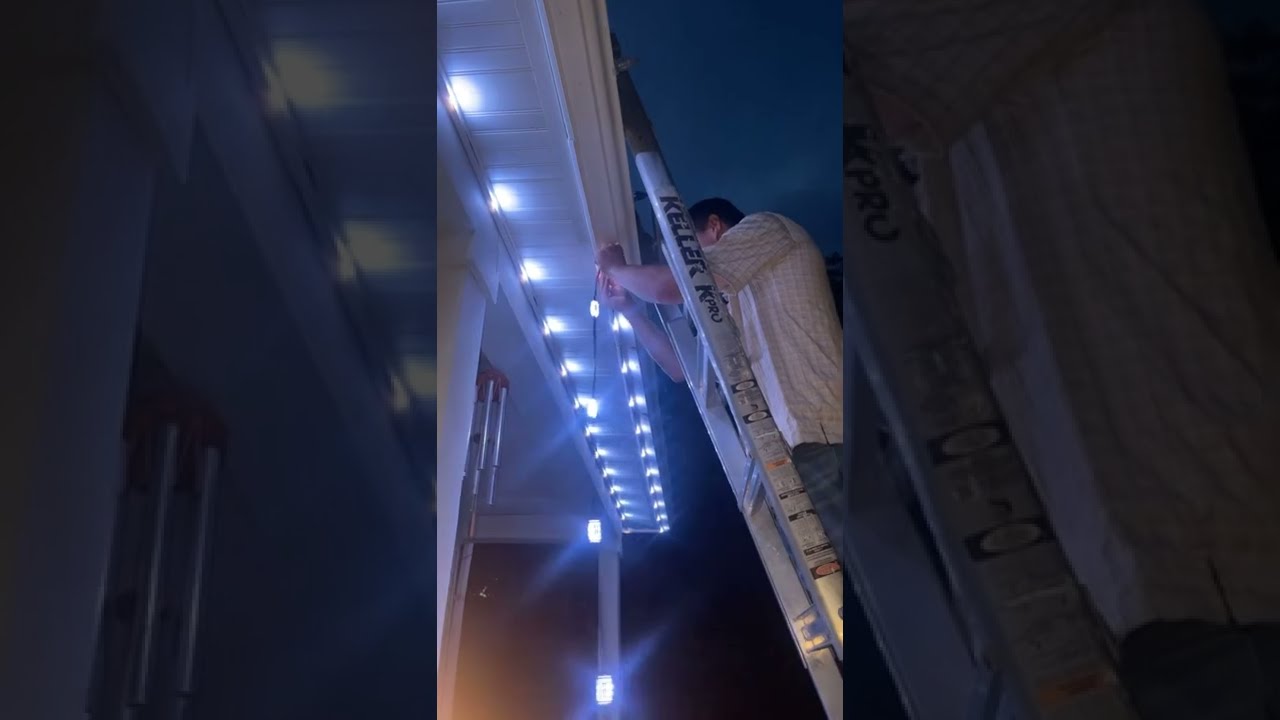
Permanent Holiday Lights remove a lot of that yearly rubbing. As opposed to dedicating a weekend to configuration and one more to takedown, you open up an application or utilize a wall surface control. That simplicity is easy to dismiss till you have dealt with it. Once house owners quit investing cold afternoons on a ladder, really few want to go back.
The safety and security case is equally solid. Roof covering edges, especially on two-story homes or high pitches, are no area for a hurried seasonal job. A great deal of individuals do not think of themselves as taking a major risk because they have actually "always done it in this manner." Then one damp shingle or one unstable ladder angle adjustments every little thing. Expert permanent installation moves the high-risk component to a trained crew with proper devices, and it gets rid of the demand to duplicate that direct exposure each season.
Cost, value, and the concern homeowners really ask
Most customers do not ask whether long-term illumination serves. They ask whether it is worth the price.
That solution depends upon the house, the chosen system, and how the property owner intends to use it. Expenses vary extensively based on direct video, roofing intricacy, control attributes, accessibility trouble, and local labor rates. An easy single-story installation may be far less costly than a multi-gable two-story home with detached structures and customized scene programs. There is no straightforward one-size-fits-all number.
Still, worth can be understood in functional terms. If you presently pay for yearly vacation light installation, storage space, maintenance, and elimination, an irreversible system might contrast extra favorably than anticipated over a number of years. If you mount seasonal lights yourself, the return is much more concerning time saved, decreased inconvenience, and a better-looking outcome. For some home owners, that is plenty. For others, the advantage is tied to amusing, community requirements, or just pride in just how the home offers after dark.

Resale worth is tougher to evaluate. Long-term lights is unlikely to change a small house right into a top-tier listing by itself. However attractive, low-maintenance exterior upgrades do shape customer perception. Individuals respond to homes that feel taken care of, present, and very easy to own. A classy system can sustain that impression.

What divides a high quality system from a frustrating one
There is more variant in this market than lots of buyers recognize. Some systems are durable, weather-resistant, and attentively engineered. Others look fine on the first day yet expose weaknesses after a season or more, specifically in extreme climates.
When I review systems and installers, I take note of a couple of useful points:
- Daytime look and track surface
- Water resistance at connections and control parts
- App integrity and ease of organizing
- Diode spacing, brightness control, and shade top quality
- Warranty insurance coverage, and who actually services problems
That last point deserves emphasis. A guarantee just helps if the company behind it responds to the phone and can send out someone competent when an area fails. Exterior systems live through heat, cold, wind, rain, and power fluctuations. Concerns can take place despite good items. Service matters.
Brightness control is an additional element buyers frequently forget. A system needs to not just switch on and change shades. It should dim efficiently. The ability to dial lighting to a softer level is frequently what makes the difference in between "festive" and "classy." On a silent weeknight, your home does not require to introduce itself to the whole block.
Installation details that homeowners should not ignore
A great installer will stroll the residential property and ask inquiries that appear picky. That is an excellent sign. They ought to be examining power access, reviewing where the controller will certainly live, examining soffit depth, and identifying issue locations like unequal trim lines or sections subjected to heavy runoff.
On some homes, the cleanest aesthetic outcome originates from tucking the lights a little back under the soffit so the glow mirrors off the exterior. On others, the architectural profile requires a different positioning. The appropriate choice depends upon how the house is built and what impact you want from the street. There is craft involved below. It is not just "affix lights to side."
Homeowners ought to also ask exactly how corners are dealt with, whether visible circuitry will be lessened, and what occurs where rooflines damage or transition. This is especially important on homes with additions. A front altitude may consist of trim products from different periods, and those surface areas do not all accept fasteners in the exact same way.
If you stay in an area with ice, intense summer sun, salt air, or regular tornados, discuss that early. Environment affects material efficiency. What functions wonderfully in a mild region might require additional security or a different mounting method elsewhere.
Everyday use is where contentment is won or lost
A permanent system can be technically impressive and still come to be aggravating if daily procedure is clumsy. Property owners must analyze just how they in fact want to utilize the lights.
If the app is sluggish, buggy, or confusing, enthusiasm discolors quick. If the system can not quickly store favored scenes, individuals end up leaving it on one setting because altering it feels like a duty. If the controls are also wide and do not enable useful zone monitoring, a big residence may never look balanced.
The best systems make average use simple. Sundown organizing, timed shutoff, a few polished presets, and simple brightness adjustment go a long way. That might appear standard, however benefit is what makes a permanent arrangement really feel costs after the uniqueness puts on off.
For several households, the pleasant area is straightforward: a warm nighttime accent scene, a brighter welcome-home setting for visitors, and a handful of seasonal presets. That is normally enough. Not every residence needs a collection of 200 animations.
Common errors that make a home look even worse, not better
The market teems with instances that prove permanent lights is not immediately appealing. One of the most regular errors are very easy to identify when you understand what to look for.
The first is over-lighting. Excessive intensity rinses architectural information and draws attention to the fixture line rather than the house. The second is poor shade discipline. Saturated colors used frequently can make a good home really feel industrial or newfangled. The third misbehaves placement. Unequal spacing or sloppy edge changes produce a disruptive rhythm that the eye catches immediately.
Another issue is mismatch. If your home's exterior illumination system is constructed around soft lantern-style components, a piercing cool-white roofline treatment will look separated. Also, if your house has an improved, standard facade, animated patterns every night can undercut that character.
This is where judgment matters greater than attribute count. An advanced setup is not the one with one of the most results. It is the one that enhances the home without requesting consistent attention.
Who advantages most from this upgrade
Not every home owner needs Permanent LED Lighting Installation, however there are clear cases where it makes solid sense. Busy households that desire the cheery look without the seasonal labor are evident candidates. So are property owners preparing to age in position, where decreasing ladder work is an authentic security renovation. Individuals who captivate often, survive on popular corner great deals, or just care a lot about nighttime aesthetic allure also tend to see the value quickly.
It is specifically appealing on homes where roofline illumination can specify solid design. A tidy summary on the ideal house can create a polished evening visibility that landscaping alone can not attain. At the very same time, the upgrade can be remarkably efficient on simpler homes, where a restrained warm glow includes dimension and makes the property really feel more finished.
It might be much less engaging for homeowners who highly do not like visible modern technology, rarely use exterior lights, or plan to relocate soon and are not likely to delight in the system enough time to validate the expense. There is no pity in choosing that typical seasonal design fits your behaviors better. The factor is to match the item to the household, not the trend.
A good last examination before you commit
Before signing a contract, ask the installer to reveal you a neighboring completed task in person, preferably throughout the day and once more after dark. Photos hide a lot. They compress scale, soften flaws, and make brightness more challenging to evaluate. Standing in front of a real residence tells you far more. Can you see the track from the driveway? Does the light appearance smooth? Are the corners neat? Does the shade feel sophisticated or harsh?
That easy check out often makes clear the decision. I have actually seen property owners go from enthusiastic to reluctant once they discover noticeable hardware on a residence comparable to their own. I have likewise seen skeptics become encouraged when they understand just how very discreet a well-executed system can be.
If feasible, speak to the owner for 2 mins. Ask what they make use of usually, whether the app behaves dependably, and how service has been. Those solutions are normally better than a sales brochure.
The clever upgrade is the one you will certainly still value in five years
Exterior upgrades earn their keep when they continue to feel helpful long after the excitement of setup day fades. Long-term Holiday Lighting can absolutely fulfill that standard, but only when the style is thoughtful and the execution is clean.
The most effective projects are not the flashiest. They are the ones that make a home feel even more completed every evening, minimize yearly trouble, and give home owners silent adaptability throughout the year. They sustain festive minutes without living in long-term event mode. They provide color when color is needed and settle into Classic Warm Soft Lights when the objective is simple comfort and curb appeal.
That balance is what makes Permanent LED Lighting Setup such a clever upgrade. It is not merely concerning staying clear of tangled hairs in a garage bin. It has to do with giving the home a much more sleek nighttime identity, one that works in December, in July, and on every average evening in between.